Weighted Blankets: Who They Help, Who They Don't, and How to Choose
MC
The first time most people get under a weighted blanket, the reaction is the same: a long breath out. It feels like being tucked in by someone who means it.
Whether that feeling turns into better sleep is a different question. Here's what's known, what's hype, and how to choose one if you want to try it.
How they're supposed to work
Weighted blankets spread weight evenly across your body, usually with glass beads or a thick knit. The idea is called deep pressure, the same calming feeling some people get from a firm hug or a heavy coat.
A few studies have found people reported sleeping better and feeling calmer with one. The research is still small, and much of it depends on how people say they feel. So: promising, not proven.
Who tends to like them
- People who sleep cold and like being bundled up
- Restless sleepers who toss and turn when they're wound up
- People who feel calmer with pressure, like a heavy coat or a tight hug
- Anyone who winds down on the couch at night and wants something cozy
Who should skip them
- Young children. Most makers say not for kids under about 3, and many pediatricians are careful with older kids too. Ask first.
- People with sleep apnea, asthma, or other breathing problems, unless a doctor says it's fine
- Anyone who can't easily push the blanket off on their own
- People with circulation problems or recent surgery
- Hot sleepers, unless you choose a breathable knit style
How to choose the right one
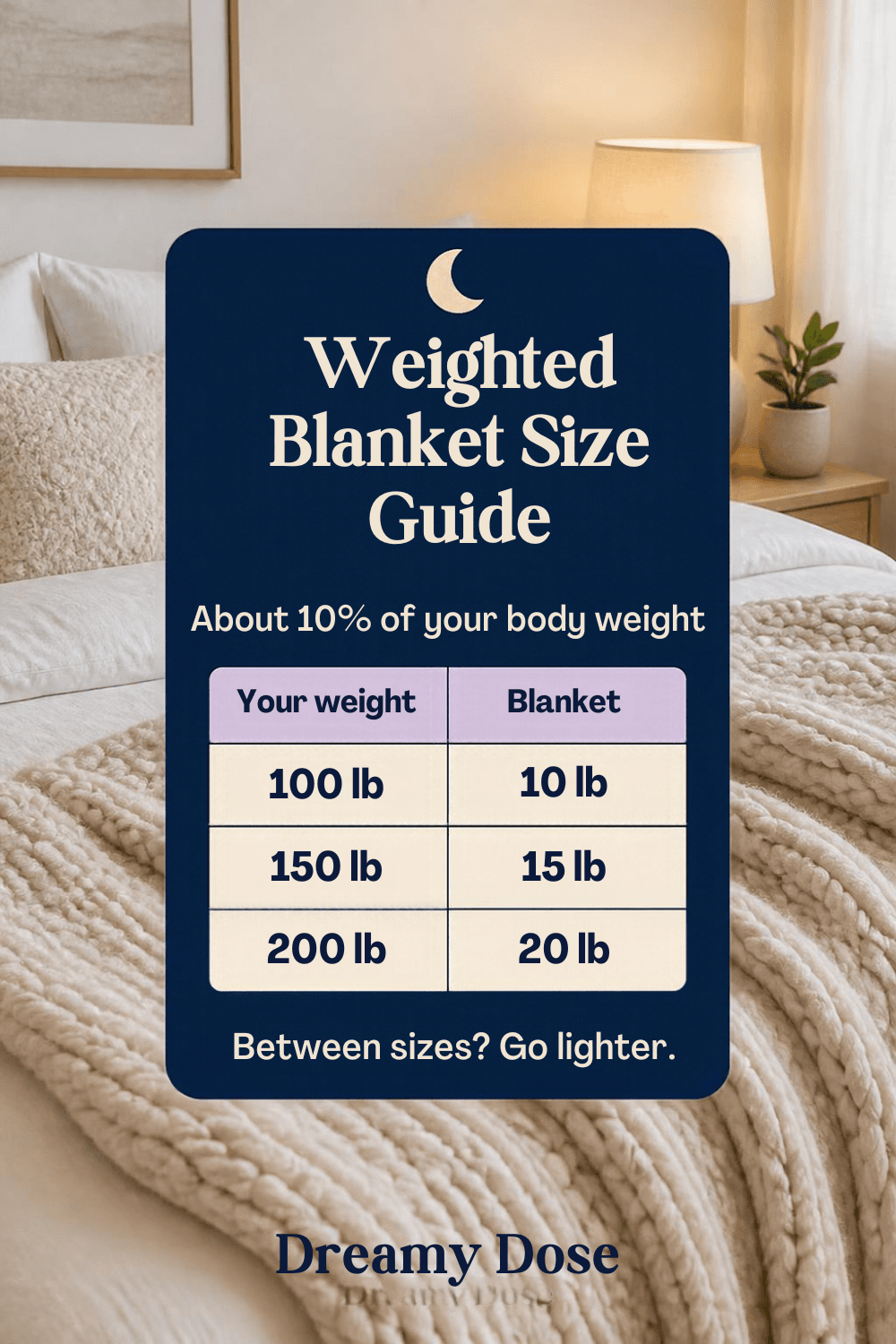
Weight: the common rule of thumb is about 10% of your body weight. If you're between sizes, go lighter. A 150-pound adult usually lands on a 15-pound blanket.
Size: choose it for your body, not your mattress. A weighted blanket is meant to lie on you, not hang over the sides of the bed. A twin size on a queen bed is normal.
Fill and fabric: glass beads sewn into small pockets spread the weight evenly. Open chunky-knit styles breathe better for hot sleepers. Get a washable cover, because the blanket itself is heavy and awkward to wash.
Give it two weeks. Most people need a few nights to get used to the weight.
Affiliate disclosure: Dreamy Dose participates in affiliate programs, including cbdMD. If you buy through a link on this page, we may earn a commission at no extra cost to you.
Health disclaimer: This article is for education only and isn't medical advice. Talk with your doctor or pharmacist before starting any supplement, especially if you're pregnant or nursing, take medication, or have a health condition.
FDA disclaimer: These statements have not been evaluated by the Food and Drug Administration. These products are not intended to diagnose, treat, cure, or prevent any disease.
Pair it with the rest of your routine
A weighted blanket works best as part of a wind-down, not a replacement for one. Dim the lights, keep the room cool, put the phone across the room, then get under the blanket.
Some people add a nighttime supplement too. If you do, pick one with lab results you can look up. The brand we link to is cbdMD's sleep line.

The short version
Weighted blankets feel calming to a lot of people, and the early research is promising. Choose about 10% of your body weight, sized for your body, with a washable cover. Skip it for young kids and anyone with breathing problems unless a doctor says yes.
Waking up in the night anyway? Here's what to do at 3 AM.
When the clocks change, here's how to reset your sleep in four days.