Why You Keep Waking Up at 3 AM (And How to Fall Back Asleep)
MC
You open your eyes. The room is completely dark. You check the phone even though you know you shouldn't: 3:07.
And now your brain is up. The email you didn't answer. The bill. Whether you locked the car.
If this is you most nights, you have a lot of company. Waking in the night is one of the most common sleep complaints there is. Here's what's usually behind it, and what helps you get back down.
Waking up at night is normal. Staying up is the problem.
Sleep runs in cycles of roughly 90 minutes, and most people surface briefly between cycles several times a night. You usually don't remember it.
The trouble starts when one of those brief wake-ups turns into 45 minutes of staring at the ceiling. That's the part you can work on.
The usual suspects
- Stress. Your body's alert hormones start rising in the early morning hours, and a stressed brain grabs that moment.
- Alcohol. A drink can make you drowsy at 10 and wake you at 3, once your body finishes processing it.
- A warm room. Your body temperature needs to drop for deep sleep, and a warm room works against it.
- Needing the bathroom. Big drinks in the evening, or some medications, are common reasons.
- Light and noise. A phone lighting up, a partner snoring, the heat kicking on.
- Hormone changes. Perimenopause is a very common and under-discussed reason women in their 40s start waking at night.
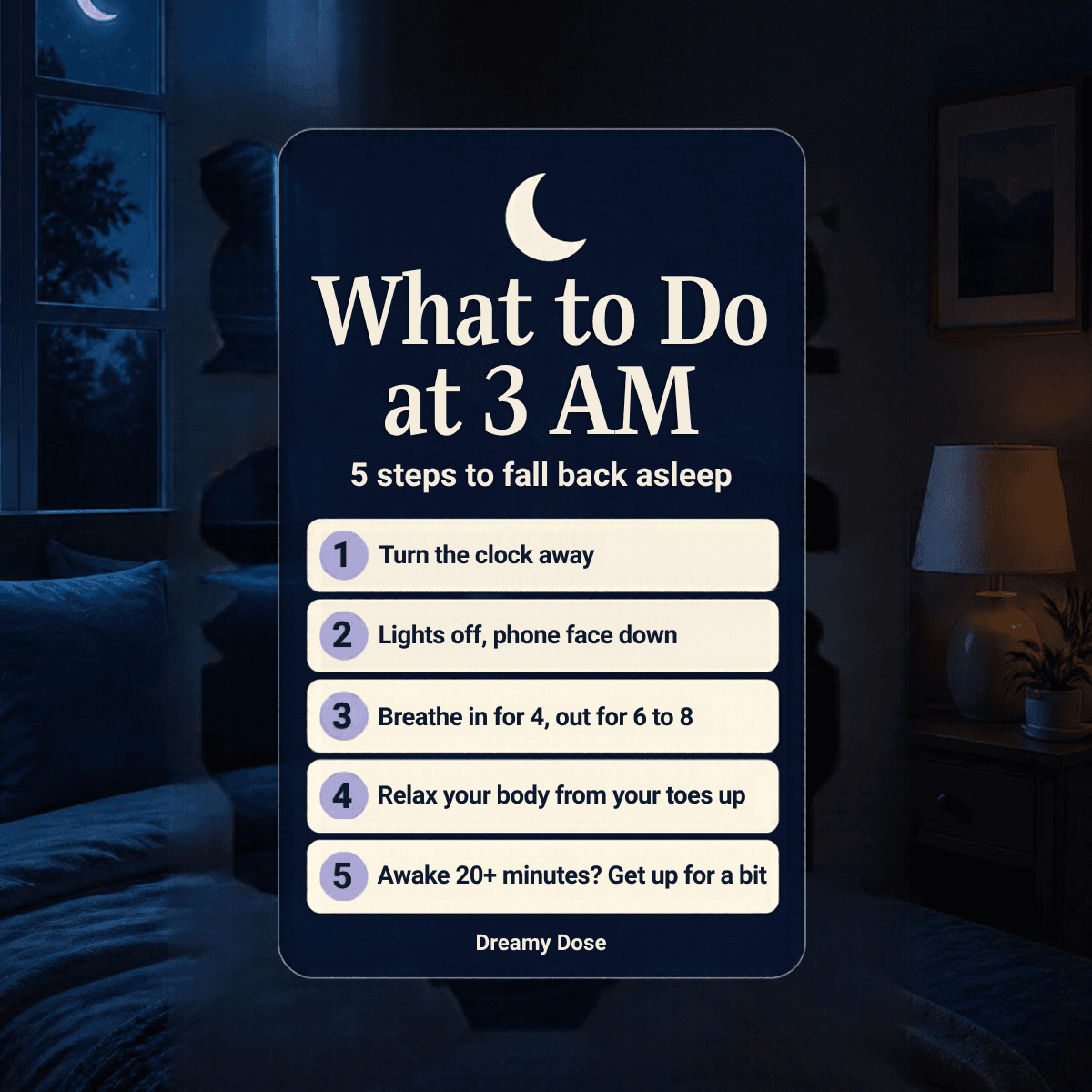
What to do at 3 AM
- Don't check the time. Turn the clock away. Seeing 3:07 starts the math ("if I fall asleep now, I'll get...").
- Keep the lights off and the phone face down.
- Breathe slowly: in for 4, out for 6 to 8. A longer breath out tends to settle the body.
- Relax one body part at a time, from your toes up.
- Still awake after about 20 minutes? Get up. Go to another room with dim light and do something dull, like folding laundry. Go back to bed when you feel sleepy.
That last one sounds backwards, but it's a core part of CBT-I, the approach many sleep specialists recommend first for ongoing sleep trouble.
The worry list trick
If your brain starts listing everything you need to do, give the list somewhere to go. Keep a notepad by the bed. Write each thought down in a few words and tell yourself it's handled until morning.
Some people do this before bed as a five-minute brain dump, so the list is out of their head before the lights go off.
Affiliate disclosure: Dreamy Dose participates in affiliate programs, including cbdMD. If you buy through a link on this page, we may earn a commission at no extra cost to you.
Health disclaimer: This article is for education only and isn't medical advice. Talk with your doctor or pharmacist before starting any supplement, especially if you're pregnant or nursing, take medication, or have a health condition.
FDA disclaimer: These statements have not been evaluated by the Food and Drug Administration. These products are not intended to diagnose, treat, cure, or prevent any disease.
Where a supplement fits
Some people use a nighttime supplement as one part of their routine. If you do, a few things matter more than the brand.
Take it at the same time every night, not only on bad nights. Ask your doctor or pharmacist first if you take other medications. And choose a product with lab results you can actually look up. The brand we link to is cbdMD's sleep line, which posts lab reports, called certificates of analysis (COAs), for its products.
When to call your doctor
- You wake up gasping or choking, or someone tells you that you snore loudly and stop breathing
- Night waking most nights for more than three months
- You feel exhausted during the day no matter what you try
- Hot flashes, night sweats, or a racing heart are waking you up
- Low mood, heavy worry, or panic come along with it
Sleep apnea in particular is common and often missed, and it's worth ruling out.

The short version
If you reach for melatonin on nights like this, read these melatonin myths first.
Some people like a weighted blanket for this. Here's who weighted blankets suit, and who should skip them.