Clocks Fall Back Nov 1: How to Reset Your Sleep in Four Days
MC
Everyone says falling back is the easy one. You gain an hour. Free sleep.
Then Monday comes, you're wide awake at 5:10 a.m., it's dark by 5:30 p.m., and by Wednesday you feel like you have mild jet lag without the vacation.
That's because your body clock doesn't care what the microwave says. It runs on light, meals, and habit, and it shifts slowly. Here's how to move it on purpose instead of letting it lurch.
Why the "extra hour" still throws you off
Your internal clock shifts slowly, often less than an hour a day. An overnight one-hour jump means a few days where your body thinks it's an hour later than the clock says. You get sleepy early, wake early, and feel off in the afternoon.
Early risers, parents of small kids, and anyone whose dog wants breakfast at the same time every day usually feel it most.
The four-day plan (start Wednesday, Oct 28)
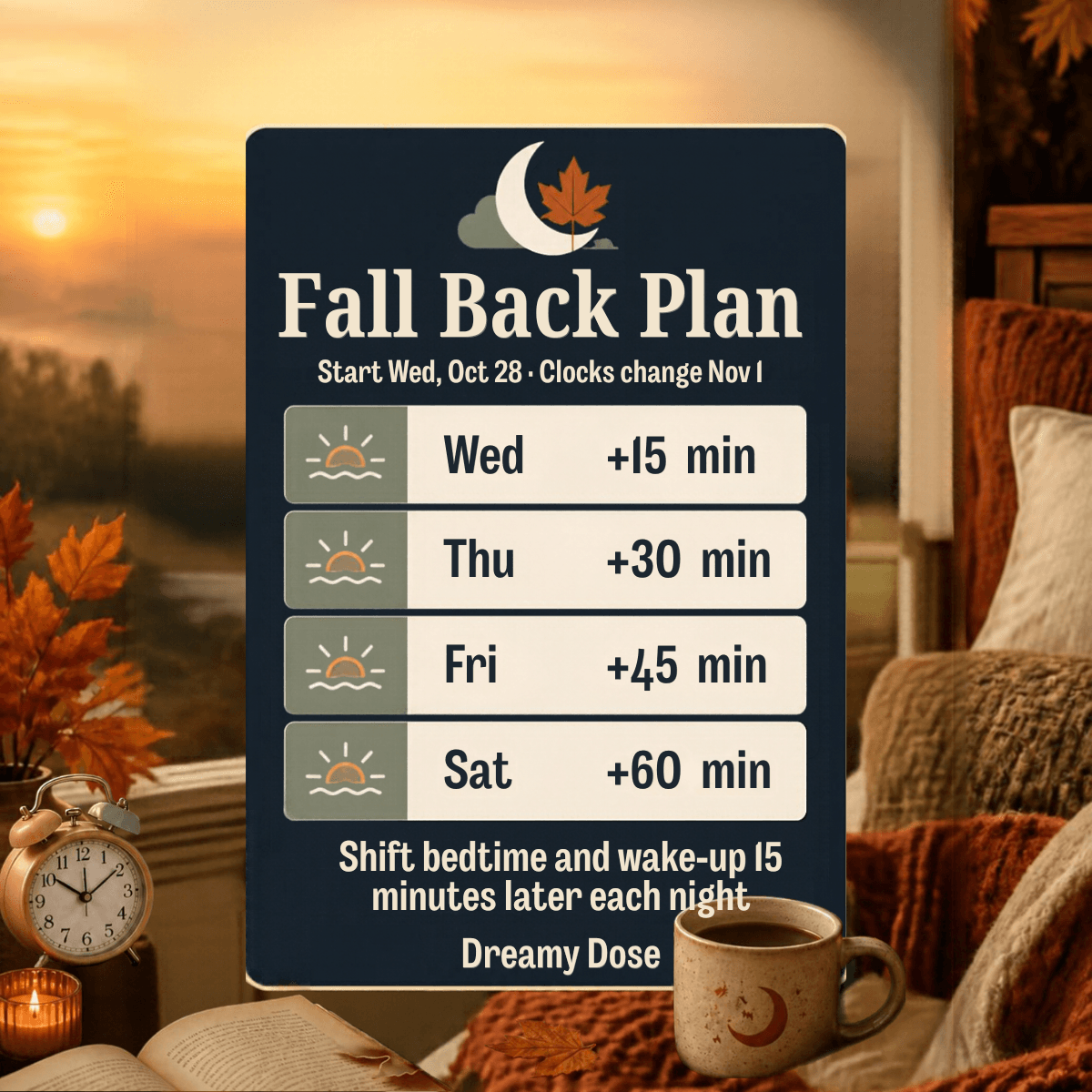
The idea is simple: move your schedule 15 minutes later each night, so by Sunday you're already there.
- Wednesday: go to bed and wake up 15 minutes later than usual.
- Thursday: 30 minutes later. Push dinner 30 minutes later too.
- Friday: 45 minutes later. Get outside in the late afternoon if you can.
- Saturday: a full hour later. On Sunday morning, the clock catches up to you.
If you have kids, shift their bedtime the same way. It's much easier than fighting a 5 a.m. wake-up for a week.
Light is the steering wheel
Light is the strongest signal your body clock gets. Use it on purpose this week.
Morning: get daylight within an hour of waking, even through a window on a gray day.
Late afternoon: once the clocks change, step outside before sunset. A short walk at 4:30 helps keep you from crashing at 7.
Evening: dim the house once it's dark outside. Lamps on, overhead lights off.
When the dark evenings feel heavier
For some people, early darkness brings low mood and low energy that lasts all winter. A little of that is common. If it's strong enough to get in the way of work, sleep, or the people around you, tell your doctor. Seasonal mood changes are common, and a light box is one option many doctors suggest.
Affiliate disclosure: Dreamy Dose participates in affiliate programs, including cbdMD. If you buy through a link on this page, we may earn a commission at no extra cost to you.
Health disclaimer: This article is for education only and isn't medical advice. Talk with your doctor or pharmacist before starting any supplement, especially if you're pregnant or nursing, take medication, or have a health condition.
FDA disclaimer: These statements have not been evaluated by the Food and Drug Administration. These products are not intended to diagnose, treat, cure, or prevent any disease.
If you use a sleep supplement
Don't change your routine and your supplement in the same week. If you already take something at night, keep it steady while your schedule shifts, and ask your pharmacist whether to adjust the timing.
If you're shopping for one, choose a brand that posts lab reports for its products. The brand we link to here is cbdMD, and you can see cbdMD's sleep products below.

The short version
Shift 15 minutes a night starting Wednesday, Oct 28. Get morning light, get outside before sunset, and dim the lights at night. By Monday, Nov 2, you'll feel like yourself instead of an hour off.
If the time change has you waking up in the night, here's what to do when you're up at 3 AM.
Thinking about melatonin for the switch? Read these melatonin myths first.