Melatonin Myths: Why More Isn't Better for Sleep
MC
It's 11:40. You took a 10 mg gummy at 11, because the bottle said 10 and the bottle seemed to know. You're still awake, and now you're also a little foggy, which somehow feels worse.
Melatonin is one of the most popular sleep supplements in the country, and one of the most misunderstood. Most of what people believe about it comes from the front of the bottle, not from how it actually works.
Here are the five myths that trip people up most, and what tends to work better.
First, what melatonin actually does
Melatonin isn't a sedative. It's a timing signal. Your brain starts releasing it as daylight fades, and it tells your body that night has started. It doesn't knock you out. It nudges the clock.
That one fact explains almost every myth below.
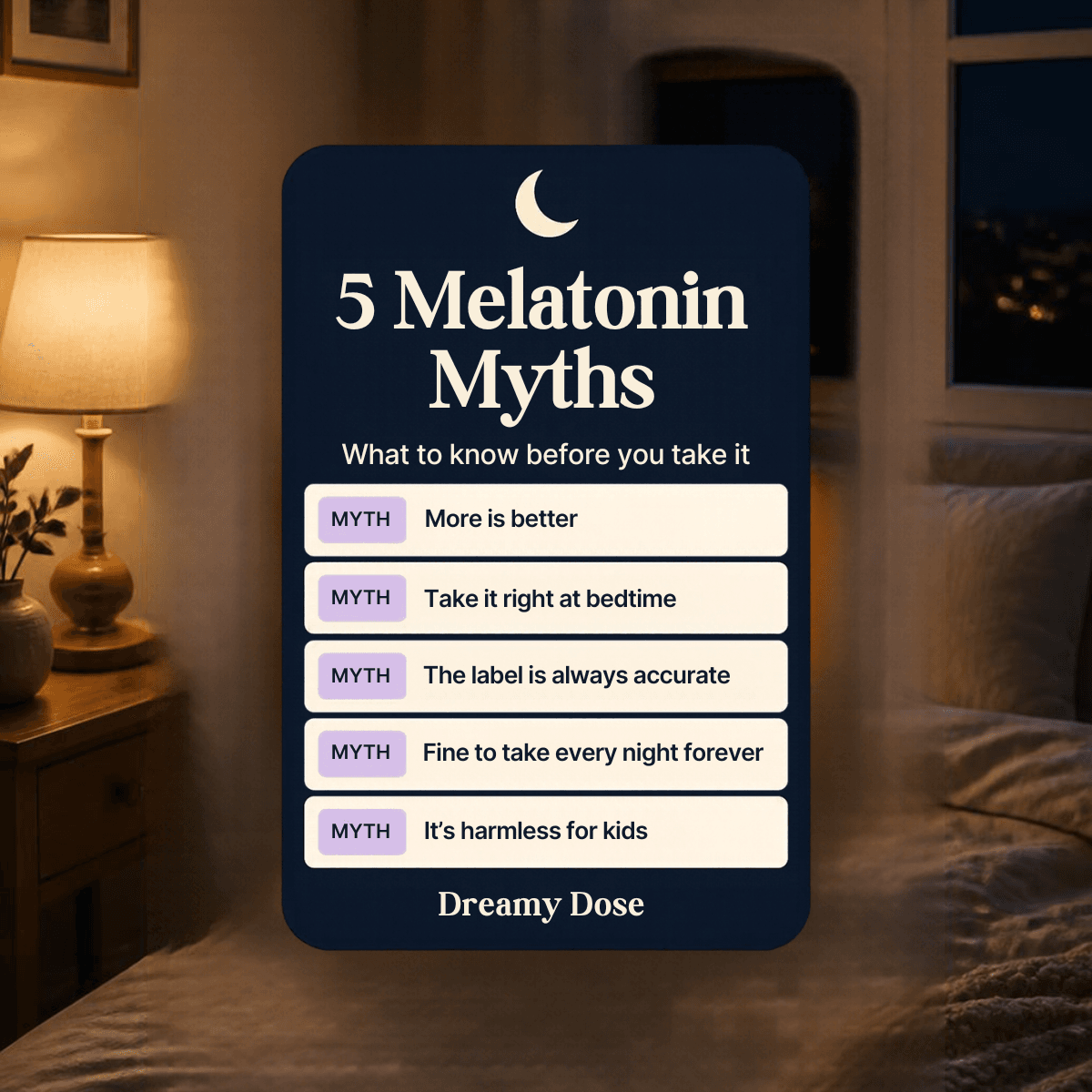
Myth 1: More melatonin works better
Studies on melatonin for sleep timing often use doses between 0.5 and 3 mg. Many gummies on store shelves contain 5 or 10 mg, and some contain more.
A bigger dose doesn't make the signal work better. Some people find a large dose leaves them groggy the next morning or gives them vivid dreams. If you use melatonin, the low end is a reasonable place to start, and your doctor or pharmacist can tell you what makes sense for you.
Myth 2: Take it right before bed
Because melatonin is a timing signal, when you take it matters more than how much. Taking it as your head hits the pillow is like sending the dinner invitation after dinner started.
Many sleep experts suggest a low dose one to two hours before your target bedtime, if you take it at all.
Myth 3: The label tells you what's in the bottle
In the U.S., melatonin is sold as a dietary supplement, so the FDA doesn't review it the way it reviews medications. Independent testing has found gummies where the real amount was far off the label, sometimes much higher.
Look for a third-party testing seal, like USP or NSF, or a brand that publishes its lab results.
Myth 4: It's fine to take every night forever
Melatonin is generally considered safe for short-term use in healthy adults. The long-term research is thinner. If you've needed something every night for more than a few weeks, talk to your doctor, because ongoing sleep trouble usually has a cause worth finding.
Myth 5: It's harmless for kids
Melatonin use in children has climbed fast, and so have calls to poison control about kids getting into gummies that look like candy. Store it like medicine, up high and closed, and ask your pediatrician before giving it to a child.
What to try first (it's free)
- Get bright light within an hour of waking. Morning light sets the clock melatonin works on.
- Dim the house after dinner. Lamps on, overhead lights off.
- Wake up at the same time every day, weekends included.
- Keep the bedroom cool. Many people sleep best around 65°F.
- Charge your phone across the room, not on the nightstand.
Affiliate disclosure: Dreamy Dose participates in affiliate programs, including cbdMD. If you buy through a link on this page, we may earn a commission at no extra cost to you.
Health disclaimer: This article is for education only and isn't medical advice. Talk with your doctor or pharmacist before starting any supplement, especially if you're pregnant or nursing, take medication, or have a health condition.
FDA disclaimer: These statements have not been evaluated by the Food and Drug Administration. These products are not intended to diagnose, treat, cure, or prevent any disease.
Where other supplements fit
Melatonin isn't the only thing people reach for. Some adults try magnesium, and others try CBD or CBN blends made for nighttime. The research on these is earlier than it is for melatonin, and none of them replace the basics above.
If you're comparing options, choose a product with lab results you can look up. The brand we link to is cbdMD's sleep line, which posts lab reports for its products.

The short version
Melatonin is a clock signal, not a knockout pill. A lower dose, taken earlier, from a tested brand, tends to beat a 10 mg gummy at bedtime. And if you're reaching for something every night, the better question is why.
Shop cbdMD Sleep
Comparing options? See how CBD, CBN, melatonin, and magnesium differ.
Waking up in the night instead? Here's what to do at 3 AM.