CBD, CBN, Melatonin, or Magnesium: Which Sleep Supplement Is Which?
MC
Stand in the sleep aisle long enough and it all starts to blur. Melatonin gummies. Magnesium powder. CBD oil. Something called CBN with a moon on the label.
They're not the same thing, and they don't work the same way. Here's a plain-English rundown of all four, so you know what you're comparing.
Melatonin
What it is: a hormone your brain makes when it gets dark. It's a timing signal for sleep, not a sedative.
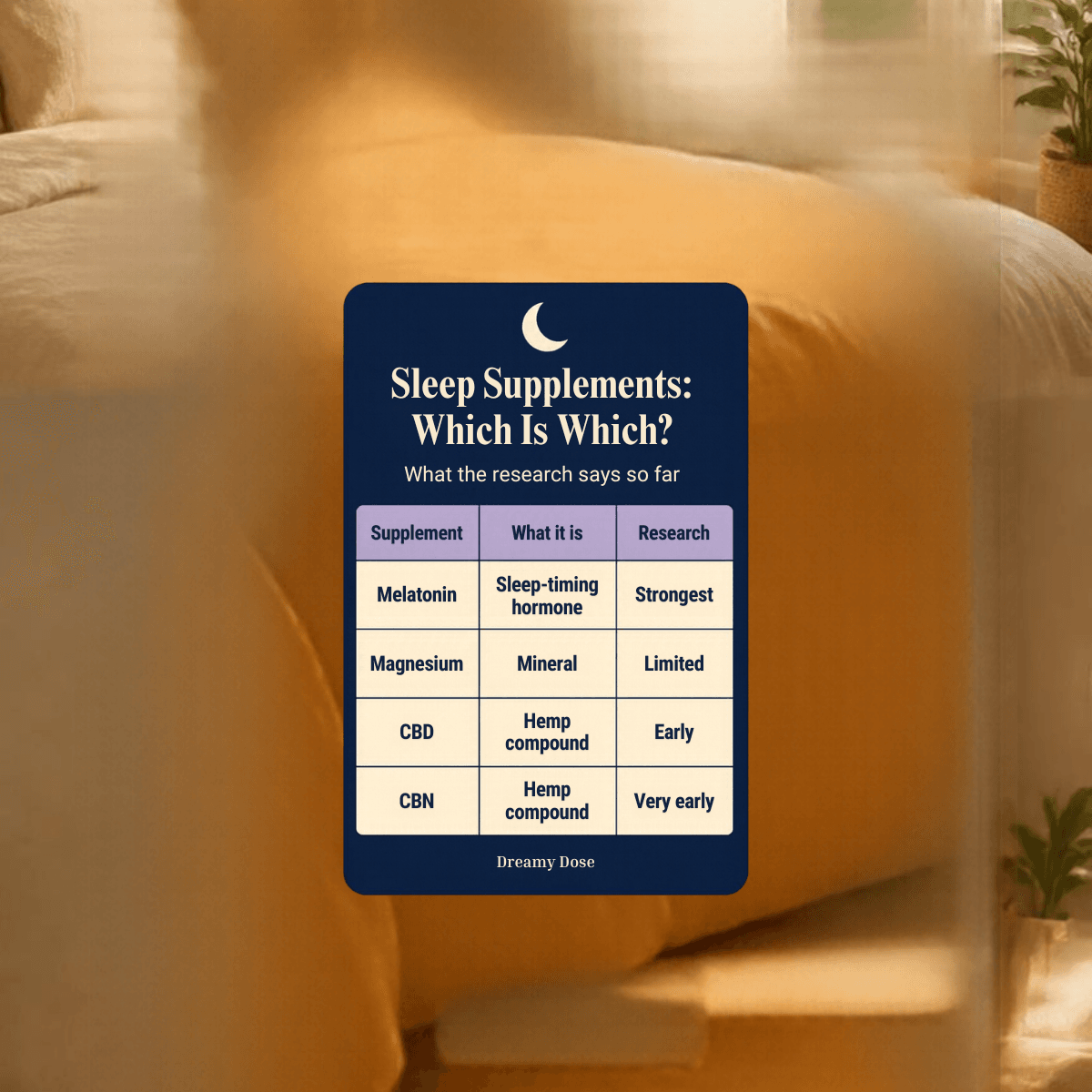
What the research says: the strongest evidence of the four, mostly for shifting sleep timing, like jet lag or shift work.
Good to know: lower doses, around 0.5 to 3 mg taken an hour or two before bed, are often enough. Many gummies contain more. Look for a USP or NSF seal.
Magnesium
What it is: a mineral your body uses for hundreds of jobs, including muscle and nerve function.
What the research says: small studies, mostly in older adults, suggest it may help sleep quality for some people, especially people who are low in it. The evidence is limited.
Good to know: magnesium glycinate is a common pick for nighttime and is usually easier on the stomach. Magnesium citrate can act as a laxative. Ask your doctor first if you have kidney problems.
CBD
What it is: a compound from the hemp plant. It doesn't cause a high.
What the research says: early. Large, well-designed studies on CBD and sleep are still few, so there isn't a clear answer yet.
Good to know: federal rules for hemp products change in November 2026, so product lines may change. Always check for a lab report tied to your batch, called a COA. CBD can interact with some medications.
CBN
What it is: another compound from hemp, often sold as the "sleep cannabinoid" and usually blended with CBD or melatonin.
What the research says: very early. Most sleep claims about CBN come from marketing, not from studies in people.
Good to know: check whether the product also contains melatonin, so you know what you're actually taking. The same COA rule applies.
How to choose
- Try one thing at a time for at least two weeks, so you know what's doing what.
- Ask your doctor or pharmacist first if you take medication, are pregnant or nursing, or have a health condition.
- Look for third-party testing: a USP or NSF seal for melatonin and magnesium, and a batch-matched COA for CBD and CBN.
- Keep the basics going: a steady wake time, morning light, and a cool, dark room.
Affiliate disclosure: Dreamy Dose participates in affiliate programs, including cbdMD. If you buy through a link on this page, we may earn a commission at no extra cost to you.
Health disclaimer: This article is for education only and isn't medical advice. Talk with your doctor or pharmacist before starting any supplement, especially if you're pregnant or nursing, take medication, or have a health condition.
FDA disclaimer: These statements have not been evaluated by the Food and Drug Administration. These products are not intended to diagnose, treat, cure, or prevent any disease.
The brand we link to
For CBD and CBN products, the thing we won't compromise on is lab results you can look up. That's why we link to cbdMD's sleep products: they post lab reports for their products.

The short version
Melatonin is a timing signal with the best evidence. Magnesium is a mineral with modest evidence. CBD and CBN are early science, with more marketing than studies so far. Whatever you choose, try one at a time and buy tested.
Before you try melatonin, read these melatonin myths.
Not a supplement person? Here's our guide to weighted blankets.