DIY Sleep Routine: A Simple Wind-Down Plan (and Where a Supplement Fits)
MC
Most sleep advice is a list of twenty rules nobody follows. This is a short routine you can actually stick to, built on the habits sleep researchers point to most often.
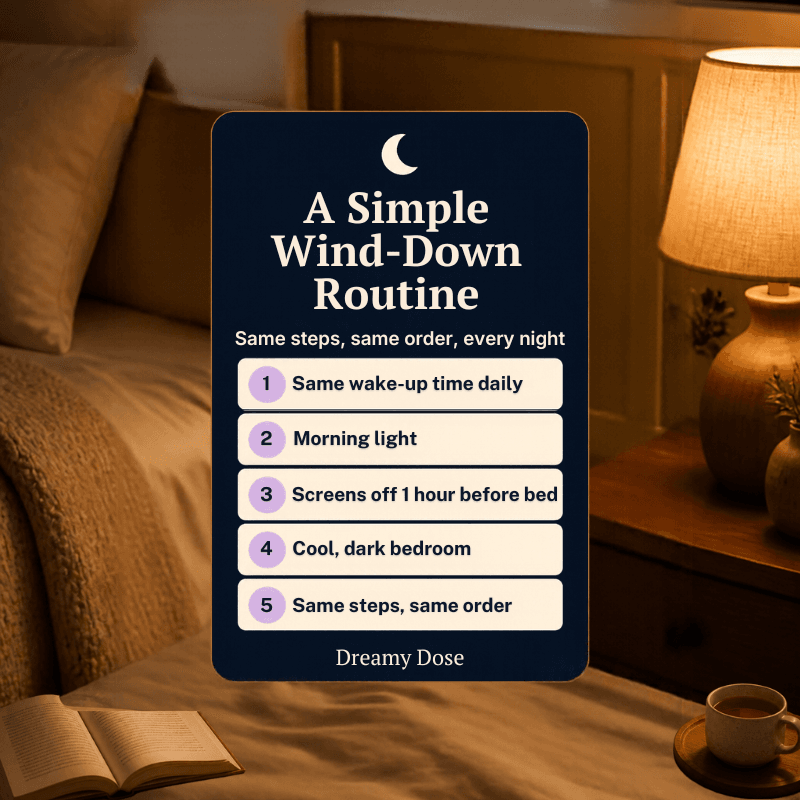
Do it for two weeks before you judge it. Routines work because they repeat.
Step 1: Pick a wake-up time and keep it
Your wake-up time matters more than your bedtime. Getting up at the same time every day, weekends included, is what sets your body clock. Bedtime tends to follow on its own once mornings are steady.
Step 2: Get morning light
Get outside, or sit by a bright window, within an hour of waking. Even 10 minutes helps tell your body that the day has started, which makes it easier to feel sleepy at night.
Step 3: Set a wind-down alarm
Set an alarm for one hour before bed. When it goes off, dim the lights, put your phone on the charger across the room, and switch to quieter things.
Step 4: Build a 20-minute wind-down
Pick three or four of these and do them in the same order every night. The repetition is the point.
- A warm shower or bath
- Light stretching
- Reading a paper book
- Writing down tomorrow's to-do list so it's out of your head
- Slow breathing: in for 4, out for 6 to 8

Step 5: Set up the bedroom
- Cool: many people sleep best around 65°F.
- Dark: blackout curtains or a sleep mask.
- Quiet: earplugs, a fan, or a white noise machine.
- Use the bed for sleep. If you're awake for more than about 20 minutes, get up and do something dull in dim light until you feel sleepy.
Step 6: Watch caffeine, alcohol, and late meals
- Stop caffeine by early afternoon.
- Alcohol can make you drowsy at first, but it tends to wake you up later in the night.
- Finish big meals two to three hours before bed.
Track it for two weeks
Keep a simple sleep diary next to the bed: what time you went to bed, roughly when you fell asleep, how many times you woke up, and how you felt the next morning. After two weeks you'll see patterns you'd never notice day to day.
Affiliate disclosure: Dreamy Dose participates in affiliate programs, including cbdMD. If you buy through a link on this page, we may earn a commission at no extra cost to you.
Health disclaimer: This article is for education only and isn't medical advice. Talk with your doctor or pharmacist before starting any supplement, especially if you're pregnant or nursing, take medication, or have a health condition.
FDA disclaimer: These statements have not been evaluated by the Food and Drug Administration. These products are not intended to diagnose, treat, cure, or prevent any disease.
Where a supplement fits
A supplement is optional, and it works best as a last layer, after the habits above are steady. Otherwise you can't tell what's making a difference. Research on CBD and sleep is still early, and results vary from person to person.
If you decide to try one, talk to your doctor or pharmacist first, especially if you take any medication. Choose a product with a lab report you can look up, start at the low end, and change only one thing at a time. The brand we link to is cbdMD, which posts lab reports for its products. You can see cbdMD's sleep products below.

When to see a doctor
- Trouble sleeping most nights for more than three months
- Loud snoring with pauses in breathing, or waking up gasping
- Feeling exhausted during the day no matter how long you sleep
- Low mood, heavy worry, or racing thoughts that keep you up
The short version
Keep the same wake-up time every day, get morning light, set a wind-down alarm, and repeat the same short routine every night in a cool, dark room. Track it for two weeks. A supplement is optional and comes last, after a conversation with your doctor.
When the clocks change, here's how to reset your sleep in four days.
Want to add something to your routine? See who weighted blankets suit, and who should skip them.