5 Myths About CBD and Sleep (and What the Research Actually Says)
MC
CBD gets talked about like a magic sleep fix. Search for it and you'll find big promises, confident dosing advice from strangers, and very little that's actually backed up.
Here are five of the most common myths, what the research really shows so far, and what tends to matter more for sleep.

Myth 1: CBD knocks you out like a sleeping pill
CBD isn't a sedative, and it doesn't cause a high the way THC does. Some people say they feel more relaxed at bedtime. Others notice nothing at all. If you're expecting to be asleep 20 minutes after a dose, you're likely to be disappointed.
Myth 2: More is better
A bigger amount doesn't automatically mean better sleep. Higher amounts make side effects more likely, like next-day grogginess, an upset stomach, or changes in appetite. The usual advice is to follow the label, start at the low end, and change one thing at a time.
Myth 3: All CBD is the same
Products vary a lot. Full-spectrum products contain trace THC. Broad-spectrum and isolate products contain little to none. Independent testing has found products whose real CBD content was far off the label.
Look for a certificate of analysis (COA) from an outside lab that matches your batch number. Federal rules on THC in hemp products change in November 2026, so product lineups may change too.
Myth 4: It's natural, so it's safe with anything
CBD is processed by the same liver enzymes that handle many common medications, so it can change how some drugs work, including some blood thinners and seizure medications. If you take any prescription, ask your doctor or pharmacist before trying it. Skip it if you're pregnant or nursing.
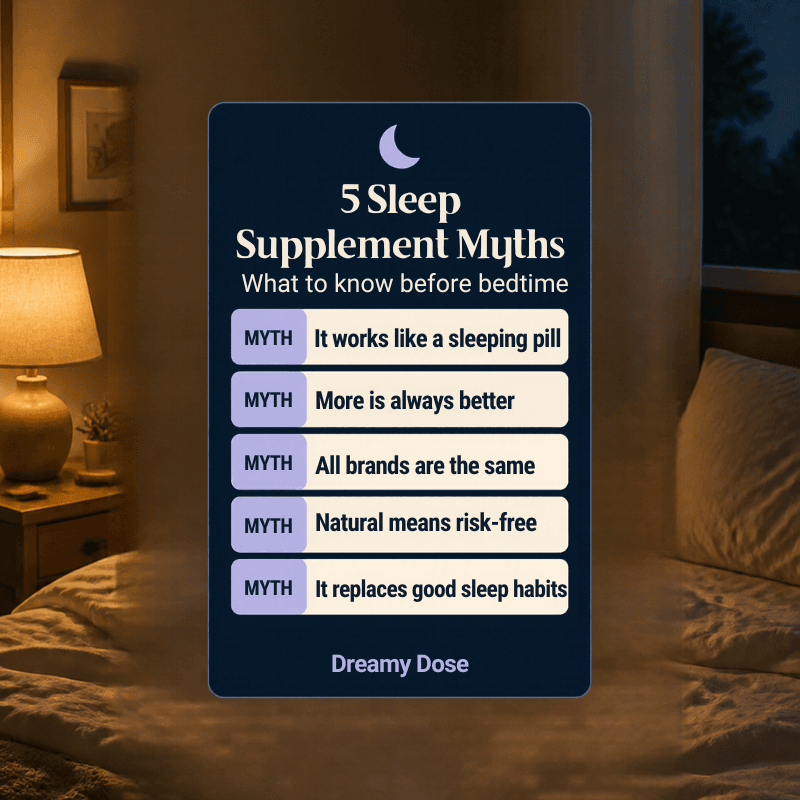
Myth 5: CBD can replace good sleep habits
No supplement makes up for an inconsistent schedule or a bright, warm bedroom. The basics still do most of the work:
- Wake up at the same time every day, weekends included.
- Get daylight within an hour of waking.
- Dim the lights after dinner, and keep the bedroom cool and dark.
- Charge your phone across the room.
What the research actually says
Research on CBD and sleep is still early. Most studies are small, use different amounts and products, and find mixed results. There isn't enough evidence yet to say who it helps, at what amount, or how much.
If you've had trouble sleeping for more than a few weeks, talk to your doctor. Snoring with pauses in breathing, gasping awake, or being exhausted no matter how long you sleep can point to sleep apnea or another treatable condition.
Affiliate disclosure: Dreamy Dose participates in affiliate programs, including cbdMD. If you buy through a link on this page, we may earn a commission at no extra cost to you.
Health disclaimer: This article is for education only and isn't medical advice. Talk with your doctor or pharmacist before starting any supplement, especially if you're pregnant or nursing, take medication, or have a health condition.
FDA disclaimer: These statements have not been evaluated by the Food and Drug Administration. These products are not intended to diagnose, treat, cure, or prevent any disease.
If you decide to try it
Talk to your doctor or pharmacist first, choose a product with a lab report you can look up, start low, and give it a couple of weeks before judging. Keep your sleep habits steady at the same time, so you know what's doing what.
The brand we link to is cbdMD, which posts lab reports for its products. You can see cbdMD's sleep products below.
The short version
CBD isn't a sleeping pill, more isn't better, products vary, and it can interact with medications. The research is still early. Good sleep habits matter more than any supplement, and ongoing sleep trouble is worth a conversation with your doctor.
Melatonin has its own myths too. Read our melatonin myths.
Comparing options? See how CBD, CBN, melatonin, and magnesium differ.